Cyber Liability Insurance – Fundamentals and Market Dynamics

Today, we were joined by Dan Lewis, Director of Executive & Specialty Risk at Acera Insurance, for an important discussion on cyber risk, cyber liability insurance, and the responsibilities of directors and officers in today’s digital landscape.
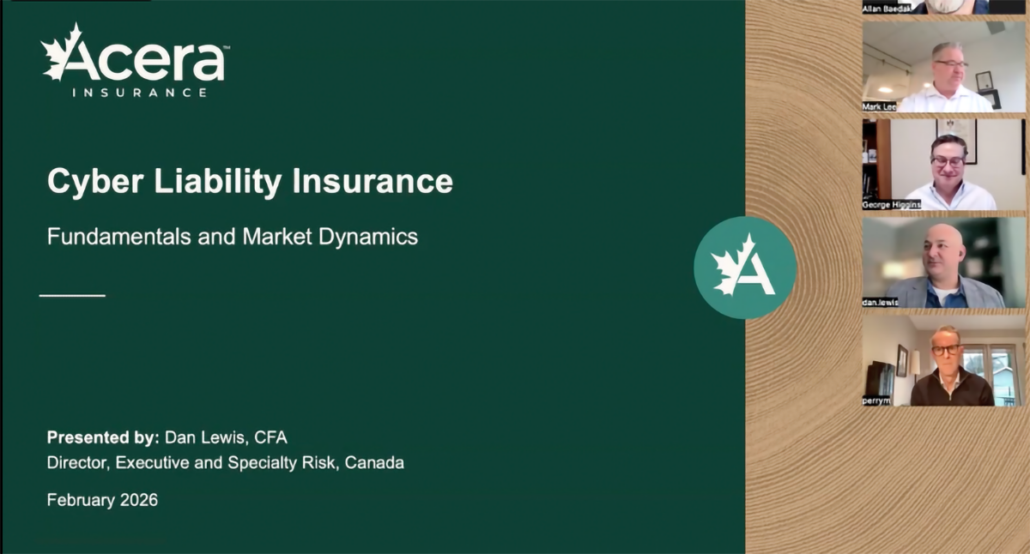
As more business operations move online, cyber threats are no longer a technical issue alone but a strategic and governance issue. Cyber attacks are global, increasingly sophisticated, and frequently result in ransomware demands paid in cryptocurrency. Notably, 68% of ransomware intrusions impact companies with fewer than 1,000 employees, proving that small and mid-sized organizations are often prime targets. Risk exposure exists at every level of the organization, from frontline staff to executive leadership. With the rapid advancement of AI, threat actors are leveraging more sophisticated tactics, including highly convincing phishing campaigns and deepfake-enabled social engineering attacks.

Beyond the initial breach, the real damage often lies in the aftermath. Post-incident recovery can lead to significant operational disruption, financial loss, reputational harm, regulatory scrutiny, and even personal liability concerns for directors and officers. Organizations must have a clearly defined and tested incident response plan that outlines roles, communication protocols, and immediate action steps during a crisis. For directors and officers, cybersecurity must remain front of mind. It is not just an IT responsibility; it is a governance priority. Active oversight, risk mitigation strategies, and proactive prevention measures are key to protecting the organization, its stakeholders, and leadership.
Strategic Recovery Plans Help Ensure Business Resilience

At today’s Virtual Breakfast Forum, we were joined by Dann Konkin, President and CEO of Ampco Manufacturers, who shares insights on the critical importance of disaster recovery and business continuity planning in today’s workplace. From cyberattacks, power outages to pandemics and other unexpected disruptions, organizations must be prepared to respond effectively when the unforeseen occurs.

A well-structured and strategic recovery plan helps to ensure business resilience. It enables organizations to maintain essential operations, protect employees and data, and quickly resume critical functions after an interruption. Proactive planning not only minimizes downtime and financial loss, but also strengthens long-term organizational stability and trust.

In this conversation, Dann also emphasized that business continuity planning isn’t just a technical safeguard, but a leadership responsibility. By investing the time to plan, test, and regularly update recovery strategies, organizations can move from reactive crisis management to confident preparedness.

Regency Safety Journey: from Challenge to Cultural Transformation


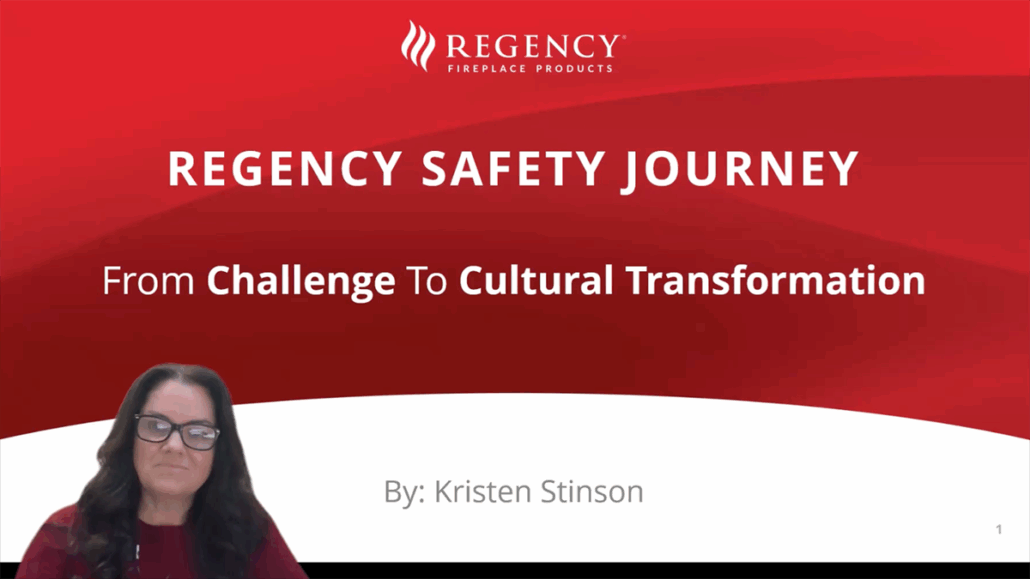
In today’s Virtual Breakfast Forum, Kristen Stinson, Senior Vice President and Chief People Officer at Regency Fireplace Products, shared powerful insights on the importance of organizational culture—and how a strong change-management strategy can directly improve the health and safety of a workplace.

One of the most impactful initiatives Kristen has championed is the implementation of a comprehensive Safety Management System. This framework establishes standardized structure, clear expectations, and consistent processes across all departments. Together with several complementary programs, this system has driven remarkable results. Regency has significantly reduced its lost-time injury frequency rate, strengthened employee morale and engagement in safety, and lowered claims costs by over 70%.

Kristen’s transformation journey reinforces a key message: meaningful and sustained improvements in safety culture are only possible through strong leadership commitment, structured systems, robust training, defined accountability, and genuine workforce engagement.

This session was recorded and added to the video library for members to review at a later date.

2025 EHSCBC Round Table a GREAT success

What no one told you about safety leadership…


Many lessons learned at recent Virtual Breakfast Forum
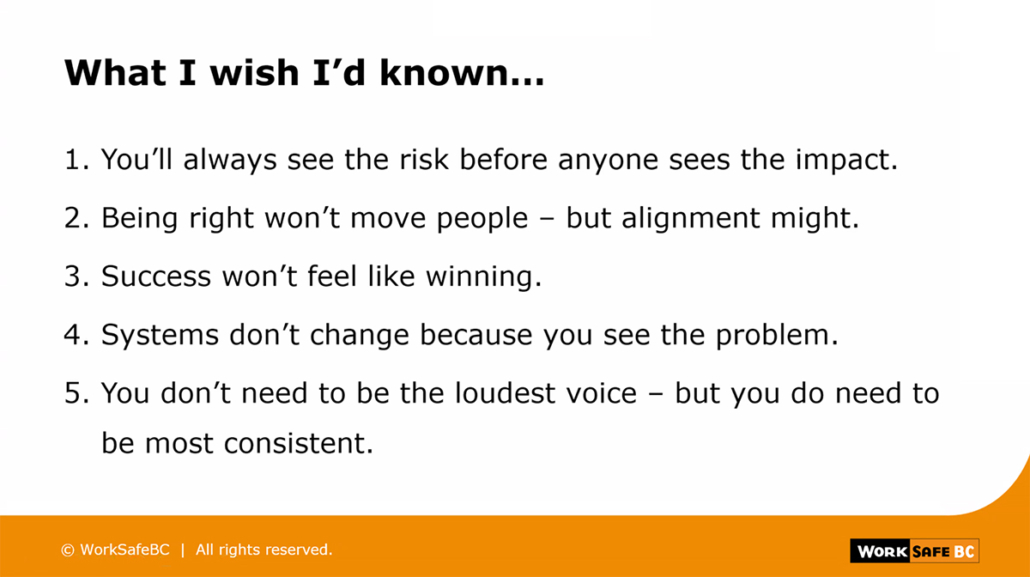
Thank you to Angelique Prince, Director, Prevention Programs & Services at WorkSafe BC for presenting last week on “What no one told you about leading in Health and Safety.”  Starting with a strong theme of “Getting Safety on the Agenda”, Angelique shared what she wished she knew then that she knows now.

Following the primary presentation, Angelique gave a short update on some of the project that WorkSafe is currently consulting on, including psychological health and safety, and how to better apply the Canadian Standard in British Columbia. 

This presentation was recorded for EHSCBC Members who were unable to attend to review at their leisure.

Safety Stories for Executives

State of Technical Safety update a hit!

Thank you to Kate Baillie for updating the Council on “The State of Technical Safety”.  Her presentation began with a prototype checklist to help determine how an event can be judged, which led into a discussion on other check lists that members use.

Kate presented 2 case studies, one on a boiler issue where there was a lack of training, and the other was a water park issue that had a disastrous outcome.  Both were situations of bad decisions making matters worse.  The case studies were recorded and put into the video library so they can be viewed by members when needed.

Members were also updated on the “Top 5 Safety issues” from their perspective:

  1. Carbon Monoxide
  2. Gas line strikes (Digging up)
  3. Ammonia release
  4. Electrical fires
  5. Electric shocks

Remember: Never sacrifice for time, money or your reputation.


Sick Days management

A big thank you to Anna-Maria Parente, a EHSCBC board member and Chief Human Resources Officer at SureWerx for her presentation on Sick day management.  Over the course of the presentation, she covered many strategies, policies, and opportunities to better manage sick days, absenteeism, work from home and proactive ways to help prevent abuse of sick days. 


By sharing how her company deals with many of these issues others were able to learn new methods and how to better track sick days and build strong polices.  Additionally, Anna-Maria identified some of the behaviours that could indicate potential misuse of sick days.  During the conversation other issues, like differences between unionized workers and nonunionized workers, KPI bonuses, doctors’ notes, and encouraging people to stay home when they are still contagious were discussed.

This forum was recorded for members to review at a later date.

General Roundtable Discussion

Unfortunately, the speaker for the day was sick and was not able to attend. She will be presenting in February, hopefully better by then!  As such, a general roundtable discussion was held instead, focusing on topics like sick days and employees working from home.  

The meeting started with a quick video “Getting to Zero”, an important reminder that no injuries or fatalities is the target.


A brief discussion was held on TexMed, a company used by some members to enhance their “return to work” programs.

One member shared his thoughts on sick days and working from home, including that his company had increased their sick day policy from 3 to 5 days.  A discussion ensued around the uncertainty of new government legislation around increasing sick days, and whether the new government will be making any major changes.  More conversation was based on the differences between unionized and nonunionized policies, and how they are often similar but there are differences.

Other members brought up that they were still experiencing COVID related sicknesses, and that they were often short staffed as 2-3 people would be ill at the same time.

The next virtual breakfast forum will be on January 23rd, with guest speaker Michael Wrinch from Hedgehog Technologies.

Falcon’s Journey to COR certification

Blair Norberg of Falcon Equipment walked members through Falcon’s journey in their COR certification.  The COR program has been an instrumental insurance policy that has given management peace of mind that all staff have proper tools, and that Falcon is providing a safe working environment and that everyone will go home safe to their families every night. 

Falcon has also seen a significant savings on premium rates over time due to implementing COR.  There are definitely costs to implementing COR, but Blair stated that there would be a much larger cost to the business if there was an incident.  Blair reiterated that safety is an on-going practice and a continuing journey.  Thank you Blair for the great presentation!

2024 EHSCBC Round Table a HUGE success