Round Table: Nov 2, 2021

Round Table 2021 a huge in-person success

This year’s Executive Health and Safety Council Round Table was very well received by nearly 50 members and guests.  Held at the Vancouver Club in downtown Vancouver, members gathered to learn, teach, and share from their experiences.  As in previous years, there were four sections to the Round Table: a safety story, table discussions, keynote address and the networking event.
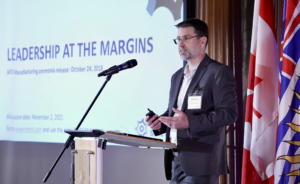
This year’s safety story was presented by Technical Safety BC and reminded members that it is often decisions that are made (or not) that cause safety incidents.  Titled “Leadership at the Margins”, TSBC noted that there can be both direct and indirect consequences of not making the correct decisions, and that there can be serious disconnects between those on the floor and those making the key decisions.  The presentation was recorded and will be shared with members for future viewing.


The Table discussions this year were centered on safety culture.  Three questions were posed to each table and tables shared their findings.  More will be shared on this later this year, but as a reminder to all, the questions were:

  • How would you describe a good safety culture?
  • How do/would you measure safety culture in your organization?
  • How could we as members hold each other accountable so we can tell we are “walking the walk”?
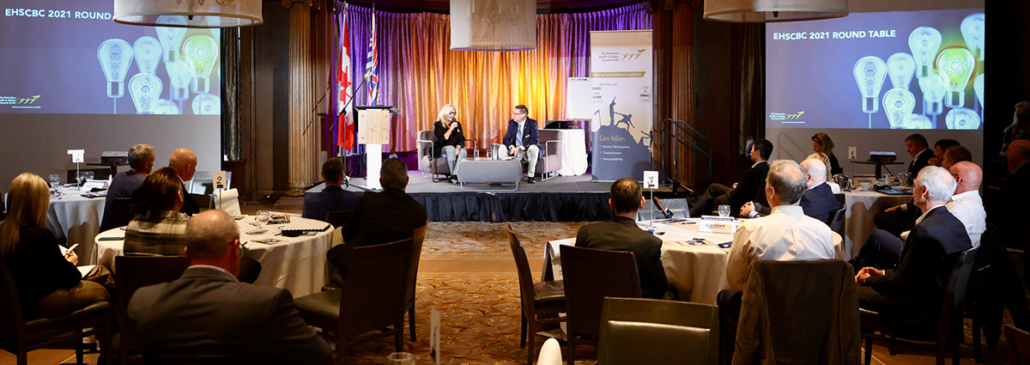
 

The Keynote address was done in a different format this year.  Rather than a speech from the podium, keynote speaker (and EHSCBC Member) Tamara Vrooman, President and CEO of YVR, and George Higgins (EHSCBC Executive Director) had a “fireside chat” on safety and safety culture.  Starting with a discussion on why safety is so important to Tamara, the discussion moved on to public safety and finished with leadership thoughts on where safety and safety policy is heading moving forward.  This session was recorded and will be made available for members to review.
The final networking session was a great way for members to chat informally, get to know each other and “trade business cards”.  Many new connections were made, and old friends were finally able to connect – in person.

Many thanks are expressed to all Round Table sponsors: Air Canada, Ampco, Kerry, KPMG, Murray Latta, SureWerx, Technical Safety BC, and WorkSafeBC.
 

VBF-MSI by the Numbers: Oct 07, 2021

Great turn out on an important issue.

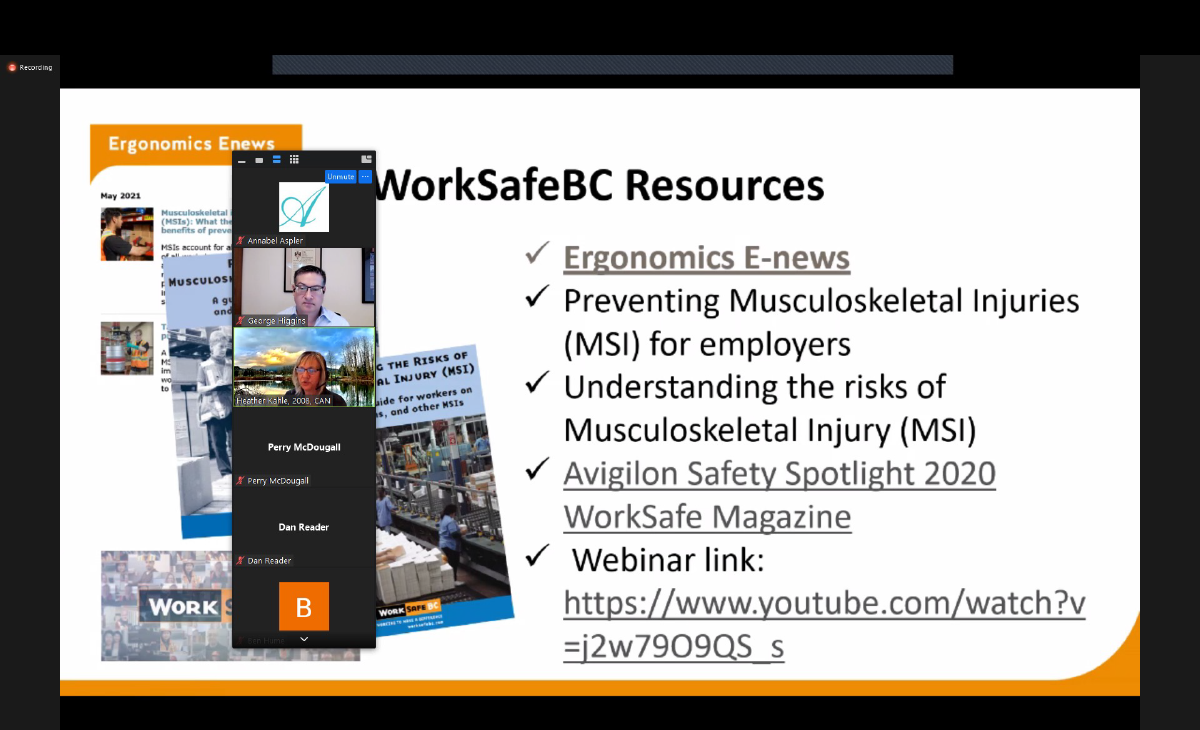
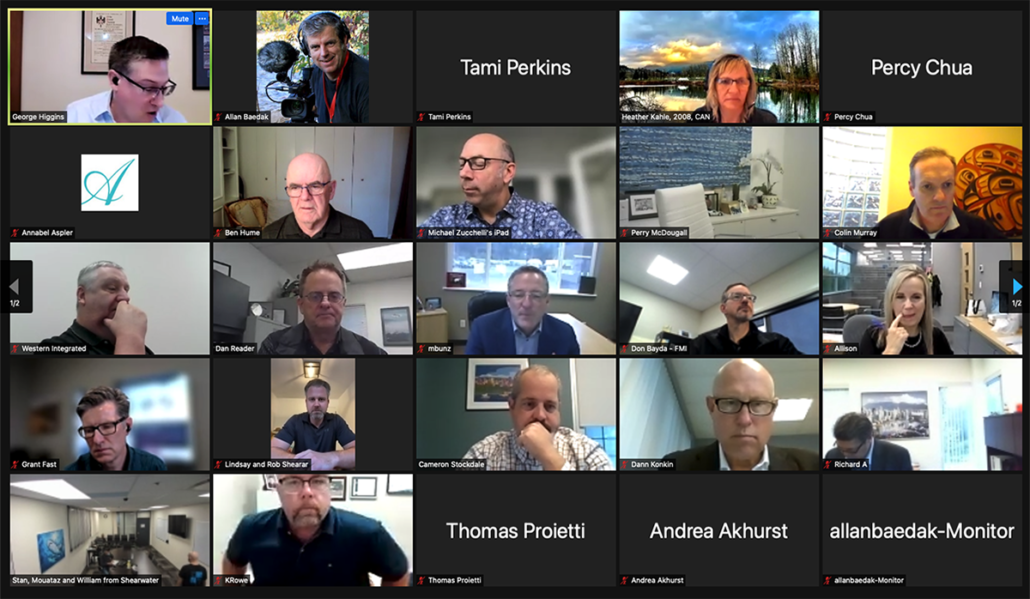
Today our members and guests had the pleasure of watching a presentation on “MSI’s By the Numbers”, by a Team from WorkSafeBC. Heather Kahle, M.SC. CRSP, Ergonomist and Tami Perkins, B.Sc. Ergonomist shared some compelling information and statistics, reminding how the prevention of MSI’s can drastically affect your organization’s progress. The PDF of the presentation can be downloaded here.

MSIs (or Musculoskeletal injuries) are defined as injuries or disorders of muscles, joints, strains & sprains caused or aggravated by work. MSIs involve the muscles and the bones in the body, as well as the nerves, ligaments, blood vessels and tendons. Some examples of MSIs are repetitive strain or overexertion injuries, caused by bending, lifting or other strenuous activities.

Studies have shown that 32% of all claims are Ergonomic MSI Claims.

Successful implementation of an ergonomic study within your organization can decrease injuries, costs, days lost, errors, waste, and insurance premiums. Focusing on ergonomics in the workplace can also boost safety, job satisfaction, competitiveness, productivity, quality, and performance.

Many organizations have workers who are working from home. To help prevent MSI’s at home, if working at desks, workers should be encouraged to take breaks by walking around the house, regularly standing and stretching and generally moving around whenever possible.

WSBC has a host of resources available including articles and guides for both employers and workers on what are MSIs, understanding the risks of MSIs, why prevent them, and where to begin.

Heather encouraged our members to reach out with any questions to the Human Factors & Ergonomics Team and WorkSafeBC at humanfactors@worksafebc.com.

Virtual Breakfast Forum – Sep 23, 2021

At today’s Breakfast Forum we enjoyed reconnecting with members, having a good discussion on Vaccine Passports.  Members reported feeling challenged on how to handle unvaccinated staff, whether to invite them back to the office, or to require them to work from home, what type of work they will do, etc.  Some members found that while their teams in the office are predominantly vaccinated, their teams in the field are widely not. This becomes an issue where more and more job sites are requiring contractors and sub-contractors to show vaccine passports when working on site.

Leaders are now facing challenges bringing people back into the office, even with safety protocols that remain in place. We need to ask our employees what is the concern: is it actually safety? Or is it simply that they prefer working from home? One tip that was offered is to try to focus on outcomes rather than where they’re working. One member reported that when COVID began, they flipped their entire office space into transient desk space, where employees need to now reserve a desk to come in to work, rather than have an assigned desk.

Labour shortage seems to continue to be a problem in some industries. Temporary workers can be fickle, choosing to move on to better paid gigs. Leaders must get creative to incentivize workers to join their teams, to stay engaged and make them feel like family. With taking on temporary workers, we must not lose sight that Health and Safety remains the utmost concern. These workers may not be familiar with the site, and we all need to be vigilant to stave off dangerous practices.

Tim Croyle of BC Transit reported that one of their biggest H&S challenges are MSI’s.  As part of their “Recover at Work” program, BC Transit has recently instituted onsite physio services in both of their transit depots. As their workers start to feel something they can book an appointment at work, allowing a more preventative approach with injuries that build over time.  Interesting timing for our October 7th Virtual Breakfast Forum, where we welcome WorkSafeBC, discussing Musculo-Skeletal Injuries. We hope to see you and a guest join us there.

Virtual Breakfast Forum – Sep 9, 2021


Thrilled to see the enthusiasm and strong attendance today at our first Virtual Breakfast Forum, after the summer season.  Three potential new members joined us today.  It was agreed among them that the networking opportunities and diverse perspectives provided from C-Suite Executives is very valuable, and participation in the session was worthwhile.

Today we discussed the implications of vaccine passports in the workplace.  Members reported that they are following the guidelines of BC’s Public Health Officer, and some indicated that they are allowing only vaccinated staff to come back to the office.

Hybrid working environments are tending to become the norm, and investing in technology to support this new culture is taking place.

Many members reported a labour shortage, created in part by CER and also by qualified individuals moving away to more remote or affordable areas. Some members reported being in a bidding war to attract labour, and it’s agreed that retention is key: business leaders will need to be flexible with their staff’s preferences in work from home, benefit packages, and overall workplace philosophies to retain staff.

Join us for our next General Meeting Virtual Breakfast forum on Sept 23rd. We’re also looking forward to our Oct. 7th forum, where WorkSafeBC will be discussing Muscular Skeletal Injuries. Keep your eyes out for more updates on our Round Table event, taking place November 2nd, in person!


Value of Delivering a Culture of Leadership – Aug 12, 2021

At this month’s Virtual Breakfast Forum, we were pleased to have Lynn Ferrari Director of People and Change at KPMG, sharing her thoughts on Leadership Culture; what it is, why it’s important, and the ways to achieve it. Leadership Culture is not something you can implement, or buy, but rather a conscious decision to purposely model behaviour, decisions and actions, every day. Lynn shared an eye-opening statistic: each of us, over our lifetimes, will work on average of about 90,000 hours.  With this in mind, it is imperative that we, and our employees, try to make the most of our time in the workplace.

What is “leadership”? It is the ability to influence a group towards the achievement of goals.

What is “management”? It is the use of authority inherent in a designated formal rank to obtain compliance from organizational members.

What is “culture”? It is the working environment created by an organization’s values, strategic vision, and mission, and sets the tone for relationships between people in an organization. A healthy organization is able to attract, obtain and grow talent.

“Leadership Culture” is the way things are done: it’s the way people interact, make decisions and influence others.

A winning culture today focuses on empowerment vs management.

The absence of a Leadership Culture contributes to disengagement costs, such as 37% higher absenteeism, 49% more accidents, 60% more errors, and up to 50% turnover. However, companies with strong cultures can enhance engagement by 30%, resulting in 19% increase in operating income, and 23% increase in earnings growth.

Lynn shared the 5 different types of leadership that exist within organizations today:

  • Directive Leadership – a culture of consistency.
  • Transformational Leadership – a culture of inspiration.
  • Participative Leadership – a culture of innovation, works to build consensus among team members.
  • Servant Leadership – a culture of inclusion, focus on serving organizations stakeholders and the larger community.
  • Autocratic Leadership – a culture of compliance, decisions that affect the business are made without consulting employees and their opinions.

Behaviors that leader’s model in a leadership culture would include:

  • Integrity, Self-awareness, authenticity, teachableness, relationship building, valuing others, inclusiveness, accountableness, consistency, courage, respect, and humility.

You can assess culture by reviewing policies, interviewing leadership, survey stakeholders, focus groups and data analysis.

Click here to see the 1-page summary of how to build a culture of leadership within your organization


Transitioning From COVID-19 to Communicable Disease Prevention in the Workplace – Jul 08, 2021


Transitioning From COVID-19 to Communicable Disease Prevention in the Workplace

At today’s Virtual Breakfast Forum we welcomed Chris Back, Director, OHS Consultation & Education Services at WorkSafeBC. Chris shared a presentation on Transitioning From COVID-19 to Communicable Disease Prevention in the Workplace.

British Columbia is currently at Step 3  in the provincial restart plan.  The current recommendation is that employers should do the best they can to maintain existing COVID-19 protocols, where they don’t impact negatively the operations (for example barriers, mask policies, directional signage, etc).  Whether the protocols impact negatively on an operation would be subjective to each employer. During this transition, as every person goes through it at their own pace, employers are encouraged to make the transition on their organizations as smooth as possible for their employees.

Step 1: Understand the risk (monitor and review communicable disease-related information – orders, guidance, notices and recommendations issued by a medical health officer or the provincial health officer from a local or regional level, or within a workplace. Employers are required to follow the guidance and driection provided).

Step 2: Implement measures, practicies and policies to reduce the risk (ongoing measures – maintain at all times. Policies to support staff with symptoms, provide had-hygiene facilities, maintain a clean environment, ensurea building ventilation is adequate and properly maintained, support employees in receiving vaccinations)

Step 3: Communicate measures, practices and policies

Step 4: Monitor the workplace and update plan as necessary

It’s important to remember not to take your eye off the ball for any other workplace safety concerns. In addition, bear in mind that psychological health is of equal importance to physical health.

Questions? Call the WorkSafeBC Prevention Information Line at  604-276-3100 or 1-888-621-SAFE


VBF: Leading Through Crisis – Jun 03, 2021

Leading through Crisis: The Critical Importance of Psychological Health & Safety (PH&S)

A big EHSCBC thank you to Dr. Joti Samra for a compelling presentation today, Leading through Crisis: The Critical Importance of Psychological Health & Safety (PH&S).

Dr. Samra kicked off the meeting by defining one important impact that COVID has had to us all: every aspect of our life has been colliding since the pandemic began. Home has become where we work, sleep, eat, spend family time, meet with our friends virtually, etc. With this in mind, Dr. Samra shared some very interesting statistics:

  • It is predicted that by end of 2021, the estimate is 40% of people will meet the criteria of a diagnosis of a major mental health issue.
  • 1/3 of our households have some level of abuse or violence.
  • As Senior Leaders, 20% will suffer from anxiety, depression, and alcohol misuse.
  • Since covid, leaders are 50% more likely to report negative impacts on their mental health.
  • 25% of leaders will say loneliness impacts them.

Psychologically Healthy & Safe Work Environments results in increased employee well-being and job satisfaction, resulting in greater employee engagement, better workplace relationships and a reduction in disability, absenteeism, and employee turnover.

As leaders, we want thriving, successful organizations. With this data, we have an imperative to take care of our teams.

Nov. 2nd is our 2021 Round Table, which we are hoping to have in person, in Vancouver, hosted at the Vancouver Club. We are happy to announce the Keynote speaker: Tamara Vrooman, CEO at YVR, Chancellor of Simon Fraser University, and Chair of the Board for the Rick Hansen Foundation.


Virtual Breakfast Forum – May 20, 2021


Rousing Discussion at Forum

On today’s call, members enjoyed a rousing conversation around employers requesting to know about employees having received the vaccination. An article was circulated to the group as a discussion point on the “grey line” between work and home life.

Some of our members reported keeping some sort of loose records on who is vaccinated, and who is not, which is helpful in terms of job or task allocation. Keeping formal records can present legal/ethical issues, and as such, many of our members reported that they will not keep any formal records, but rather continue to follow the guidelines set out by Public Health Authorities, and encourage vaccination. These same members reported that they will not restrict employees or prevent them from doing their jobs. They reported that their intention is to build a culture of a family atmosphere.

One member in the healthcare field reported that there is already legal precedent that you could require vaccinations among your staff, provided you have valid workplace reason. If the crux of an organization’s work is being done inside, in close quarters with other staff or the general public, it presents a valid reason to require vaccinations. Having a workplace policy in place, such as a condition of vaccination to board and fly on an airplane would be one way for employers to keep their customers and staff safer.

It is important to build a culture of good safety practices in the workplace. It should be top of mind to create a culture of employees being mindful of safety at home as well as at work. One way to encourage this culture would be to host a yearly Health and Wellness program, including onsite vaccinations, to show that as leaders, our staff’s health is a priority.  We will keep monitoring the legal precedents that come about in the months and years to come, and continue to follow the lead of our Public Health Authorities.

On June 3rd, we are opening up our Virtual Breakfast Forum, lead by Dr. Joti Samra to members and their guests, with the hope of growing our membership. Please invite any other Executives to join this forum.

Nov. 2nd is our 2021 Round Table, which we are hoping to have in person, in Vancouver, hosted at the Vancouver Club. We are happy to announce the Keynote speaker: Tamara Vrooman, CEO at YVR, Chancellor of Simon Fraser University, and Chair of the Board for the Rick Hansen Foundation.


Virtual Breakfast Forum – May 6, 2021

Great Discussion At Virtual Breakfast Forum

On today’s call, we welcomed our newest member Michael Hall, Executive VP Operations of Viking Air, an aircraft and parts manufacturer based in Victoria. Viking Air employs 400 people and manufactures the iconic Twin Otter aircraft.

All members agreed that everyone seems to be feeling the “languishing” – people are fed up, burn out, trying to do everything to keep morale up, and this is all taking its toll. Workforces are no longer looking forward to Zoom meetings, and mental health is still at the forefront of everyone’s minds. If it’s not dodging the actual disease, it’s keeping your mental health in check.

The question on everyone’s minds: what does work look like when this is “all over”? It was agreed that it’s a good idea to communicate and clearly lay out the plans for any reopening, to allow for certainty for employees.

While some employees are chomping at the bit to come back to the office, members agreed that we will probably never go back to 100% presence in the office. Depending on the industry, some require in-person working environments such as manufacturing, and others can function remotely, such as mostly administrative organizations. Most organizations are planning a hybrid approach, using “hot desks” and a part-time presence both at home and in the office.

Recently, WSBC has communicated that employers should take a cautious approach to the words used when discussing vaccinations with employees.  It is a slippery slope if employers are perceived as aggressively promoting getting a vaccine in order to come to work or supporting even minor consequences if they don’t.

We are all wrestling with similar issues. It’s clear that members are benefitting from belonging to an organization such as the EHSCBC, sharing issues, strategies and solutions, and celebrating successes, together.

A brief reminder of some upcoming events:

June 3rd  – Join us for a mental health check, and presentation on resiliency by Dr. Joti Samra. Members will participate in a Q&A session and round table following the presentation.

Nov. 2nd is our 2021 Round Table, which we are hoping to have in person, in Vancouver, hosted at the Vancouver Club. We are happy to announce the Keynote speaker: Tamara Vrooman, CEO at YVR, Chancellor of Simon Fraser University, and Chair of the Board for the Rick Hansen Foundation.


Virtual Breakfast Forum – Apr 22, 2021

First Annual General Meeting a Great Success

Today’s Virtual Breakfast Forum came on the heels of the Inaugural AGM for the EHSCBC. The AGM was well attended and completed quickly and efficiently. Overall, we were happy to report that the organization was successful despite the challenges the COVID pandemic created, and we are looking forward to further growth in 2021. After the AGM a regional round up provided members with insights from around the Province.  Thank you to all members who were able to attend and participate.

Thanks to Maureen Shaw who is one of the founding members of the EHSCBC, who reminded us of the Day of Mourning, taking place on April 28th. This international day commemorates workers who have been killed, injured or suffered illness due to workplace-related hazards and occupational exposures. It is not a day to feel guilty, but rather to acknowledge health and safety within your organizations. Maureen encouraged all members to speak to their teams and acknowledge to them the stress they may be under, and especially take a deep breath for yourselves.

Congratulations and welcome to our 3 new board members: Ab van Poortvliet from Technical Safety BC, Gary Herman with Gary Herman Consulting Services Ltd and Cameron Stockdale of Work Wellness Institute.  We are looking forward to our new Board members bringing a good new mix of ideas and industries to the table.

A reminder that we will be treated to a presentation by Dr. Joti Samra on June 3rd.  We will be sending out a Membership survey to our members, and please save the date for our 2021 Round Table, taking place Nov. 2nd, in person, in Vancouver.