Virtual Breakfast Forum – EHSCBC Welcomes New Member
Today’s Virtual Breakfast Meeting had the privilege of welcoming our newest member: Kate Baillie, VP Marketing & Communications at Technical Safety BC.  Kate shared that one of Technical Safety BC’s key pillars is education: getting out into the field and talking about how to help organizations make better decisions and finding out what this most important to each organization when it comes to safety.  To Technical Safety BC, “safety-minded” decision making is key, being more about people than it is about equipment. The decisions that people make for maintenance, decommissioning or upgrading equipment are the first line of defence to avoid any safety issues.  We are looking forward to Kate sharing more information and case studies with our members in the coming months.

Discussions around COVID-19 revealed potential issues with communication to staff regarding a case of potential contact. Should you have a case of staff having had potential contact, how you communicate the information is crucial to avoid panic within your team. Be clear and concise (was it a case of a person in the building having tested positive for COVID-19, or was it a case where someone came into contact 2nd or 3rd party with someone who tested positive?) Staff needs to understand when/how the contact occurred while being cognizant of privacy of the individual in question.

We are all reminded about the issue of complacency both in our personal lives as well as in our organizations. With our bubbles expanding due to kids going to school and others, we are in contact with opening up their own bubbles, we need to be extra vigilant to maintain proper distancing and sanitizing protocols. We are all concerned about how we’ll survive the winter. It won’t be so easy to social distance outside socially or for meetings when the days get shorter and the weather turns.  Remember that some individuals might struggle with mental health and wellbeing over this period. Please remember to address this in your communications with your team regularly and be sensitive to these issues as we head into the winter months.
 

Virtual Breakfast Forum

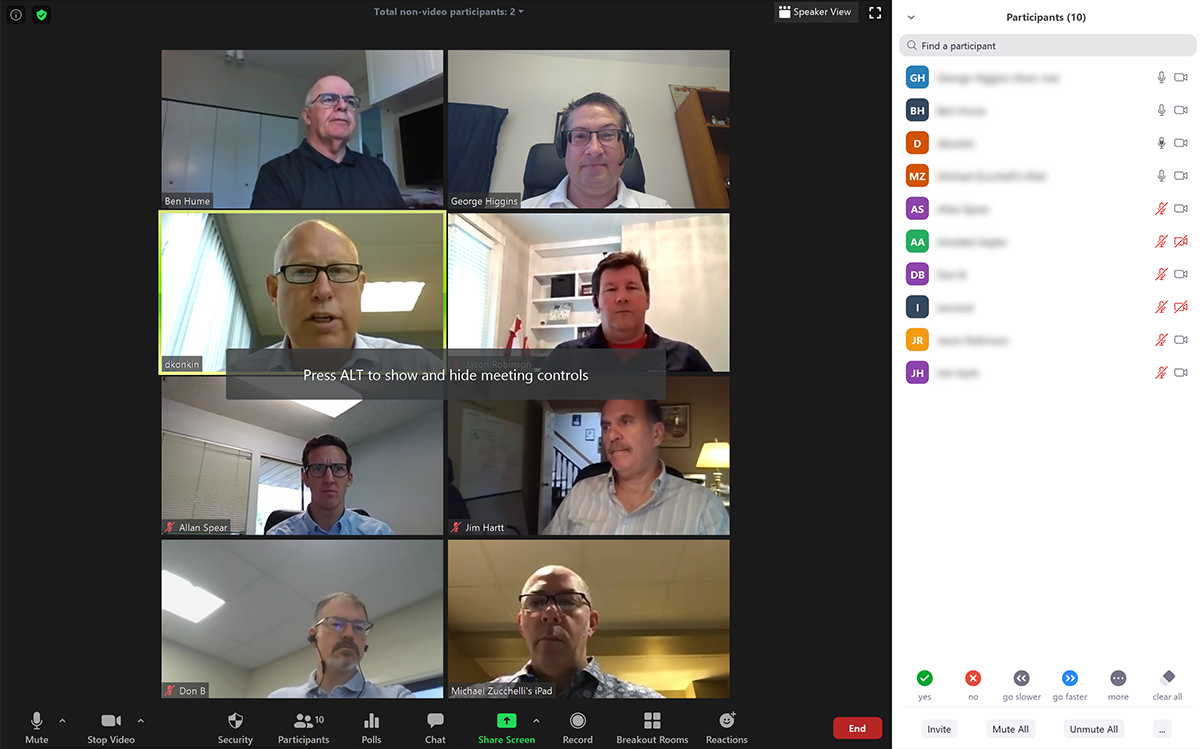
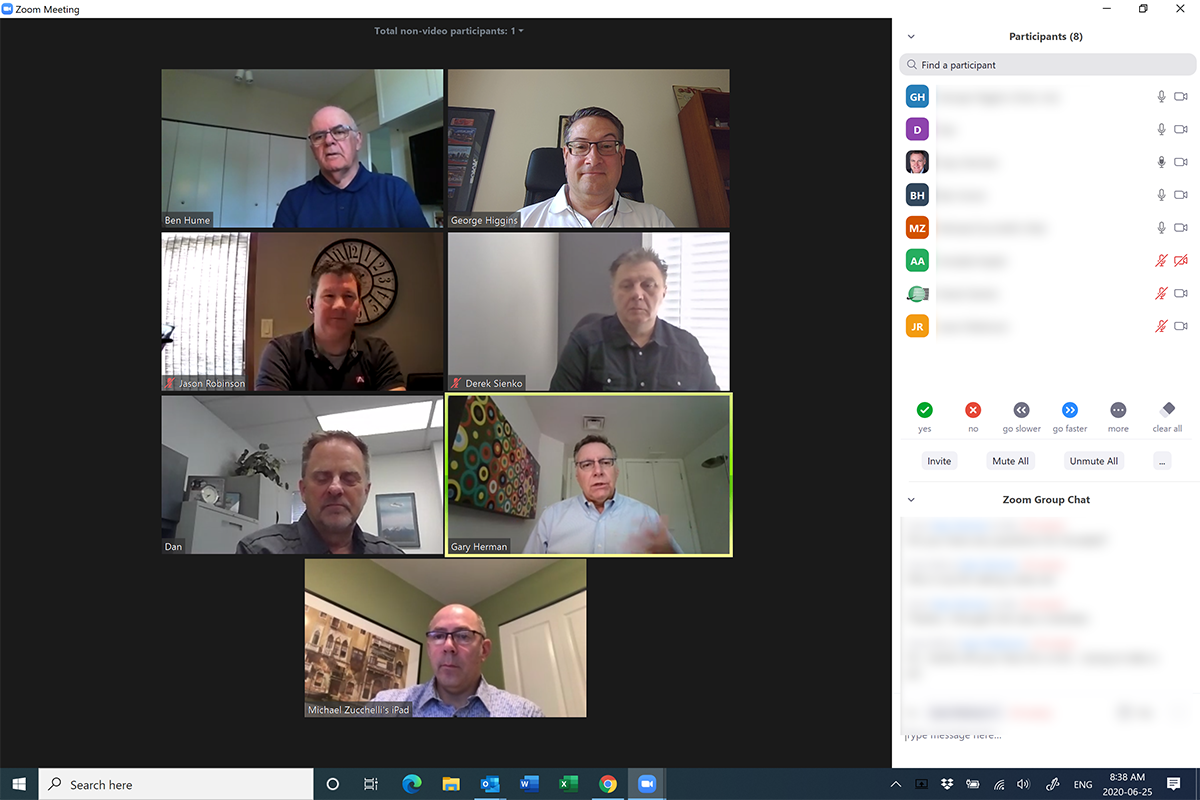
Thank you to all that attended our Virtual Breakfast Forum on Thursday, August 20th.  Conversations mainly revolved around COVID-19, each organization’s protocols and concerns for the future. All agreed that a big concern is a complacency, coupled with having younger employees could result in increased cases of COVID-19 around the workplace.

Some members have employees who have been contacted through contact tracing and these employees are now at home quarantining.

One member shared that their organization has implemented “zones” in the office. When crossing into each new zone, employees will see signage and a hand sanitizing station.

Members report that many of their organizations are operating at 80% capacity or greater.

It is interesting to note that Australia is having a very light flu season this year, due to protocols of COVID-19.

Recently, a variance was introduced through the employment standards branch for the Temporary Layoff period to last beyond Aug 30th.  Application process/ cut off date is Aug 25th. You will need 50% of the total number of staff who were laid off to approve the extension.

VBF: International work issues and concern about a second wave of Covid-19


Our Virtual Breakfast Forum today revolved around international (US) work issues and concerns about a second wave of COVID-19.

While the border to the United States is closed for non-essential travel, members have been identifying concerns within their organizations with this closure not being good for business.  Customers are impacted, skilled personnel and physical resources are scarce. The US has been enormously impacted and there seems to be no end in sight. Members are keeping a close eye on how the pandemic is impacting our neighbours to the south and preparing for the possibility of a second wave in BC. There is also a concern about travel to other areas across the country and many people prefer to stay close to home.

Many jobs have been and will continue to be impacted. Automation is replacing tasks otherwise being performed by humans. This seems to be increasing production efficiency as well as human safety in some dangerous conditions. Working from home is becoming preferable for many people and regardless of what happens, it seems that some prefer to not go back. If you are bringing staff back it is important to have an MOU of the tasks that they are expected to perform, and have this documented and signed off by the returning staff.

Many members also commented on having had very positive experiences working with WorksafeBC during COVID-19.

As we enter into the summer months, we’ll be hosting one meeting per month for July and August.  July 9th will be a special guest speaker, Andrea Zwack, who will talk about legal issues arising from the pandemic.  Included in this will be the Temporary Layoff period, union issues, protected leave, workers who don’t want to return to work and WBC requirements.

Another Successful Virtual Breakfast Forum

Today’s Virtual Breakfast Forum was the most attended to date (apart from guest speaker events), with representation from the Lower Mainland, Kelowna, Victoria and Nanaimo. Our discussions revolved around the reopening of the BC Economy, with call attendees sharing their organizations’ new policies, concerns and best practices.

The majority of attendees reported that they are positive about what the future holds for their organizations. Three concepts continue to remain at the top of all of our lists: regular communication, healthy leadership by example and reopening with mindfulness and caution.

Increasing the frequency of communication has resulted in a better understanding of individual concerns and personal issues among teams.  One attendee reported that their organization rolled out communication on how the reopening would take place, with important reminders to avoid complacency and maintaining good health and safety practices both personally and professionally.  Employees feel a sense of comfort with this knowledge and will feel more confident about what they’re coming back to.

In times of crisis, employees look at how their leaders handle situations. As leaders, you need to take care of yourselves, don’t lose the momentum of continuing with physical exercise or whatever you need to stay well and be an example for your employees.

Many employers are finding that staff working from home has significantly increased productivity. With virtual meetings now the norm, employees are no longer having to take time away from their days to travel, and an increase of attendance at meetings has been experienced. Be bold as virtual CEOs, and make a habit of connecting at least weekly with your teams. Be a part of communities such as this one (the Executive Health and Safety Council of BC), whereas a leader you can safely share your concerns and challenges with your peers.

When you begin to reopen, give people the time to reorganize and prepare for their return to work. Allow them the opportunity to organize themselves, and return as they choose. Make sure you are giving your team a window of time to help them come back. Create a new work-from-home policy and a new office policy so your employees know what is expected of them.

Each one of us as leaders or employees has unique situations, perspectives and feelings about how COVID-19 has affected us. One attendee shared that they have surveyed their front line staff to get a sense of what their concerns are and how to address them. Include your employees on decisions on how to open up. Acknowledging and respecting everyone’s uniqueness is paramount.

Some interesting topics for further discussion arose:

  • the importance of working with employment lawyers to amend some areas of employment contract agreements
  • large buildings with elevators and lobbies – how will this work maintain social distancing without bottlenecking?
  • there will be a lot of opportunities for organizations to grow their business for those that have remained strong. Keep on the lookout for opportunities of merger and acquisitions of other organizations that come available

Join us on June 25th for our next Virtual Breakfast Forum.

Wonderful event held with Keynote Dr. Joti Samra

Thanks to Dr. Joti Samra for a very relevant and informative presentation on psychological health and safety in the workplace.  As we have all experienced, COVID-19 has had a universal impact on all of us personally, and our organizations. Our work and personal lives have collided in a way they never have before. We need to think seriously about work/life integration and harmony for ourselves and our employees. As leaders, being flexible and adaptable is key. Authentic, vulnerable & compassionate leadership goes a long way to helping keep stable mental and physical health in the workplace.

Interestingly, we noticed a very strong correlation between our weekly Breakfast Forums’ regular topics and the key takeaway from today’s presentation: having open, strong, and frequent communication with your teams.  Train your management team to evaluate employees for signs of distress, anxiety, or performance changes on their usual baseline performance. Notice the issue, then check in with the colleague, stating the observation neutrally, identify that it’s different from their normal performance and ask what you can do to support them.

Following the presentation, Dr. Samra shared several resources with our group, including her “open virtual office hours” where she will make herself available for questions. Dr. Samra invited everyone to reach out to her during her next time slot, Tuesday, June 2nd at 2pm. Visit www.myworkplacehealth.com and sign up for the newsletter at the bottom of the website. Links to other resources are also available – if you missed them, please email George directly at gwhiggins@ehscbc.ca to obtain them.

We now are moving to a bi-weekly format. We invite you to join us on our next Breakfast Forum check in call on Thursday, June 11th.


2019 BC Safety Charter Round Table Keynote Address: Greg Stewart

On May 21st, 2020, we had the privilege of watching the 2019 BC Safety Charter Round Table keynote speech by Greg Stewart from Sinclar Group Forest Products. It was a riveting and emotional account of the devastating incident that took place at the Lakeland Mills site in April 2012. This story is an excellent example of leadership, and why it is important for companies to have strong safety cultures.  It also showed attendees that often disasters occur regardless of “having a plan in place” – all team members need to be vigilant in identifying risk and being a part of the solution.

There are commonalities between the Lakeland Mills incident and the sudden emergence of COVID-19 that were discussed. Most importantly, having strong communications between the leadership team and employees helps to maintain engagement in the workplace. Having a good flow of communication fosters good relationships, resulting in engagement and a higher level of adoption of good safety practices. Communication flows both ways – making sure that the staff or workers on the ground know that they are enabled to let leadership know about any concerns they might have.

Additionally, it’s important for leaders to understand and support the mental, physical and emotional challenges employees face.  A good way to encourage this is to create a culture where the employees can say “stop”. In the case of COVID-19 and the workplace, a culture where the employees feel safe to call out improper health practices, or to not come to work when they are sick: that they not be afraid to lose their jobs or be financially affected.  We as leaders need to model the behaviour for our teams to feel comfortable in doing so. Take steps to lead by example.

We are very grateful to have had the opportunity to revisit this topic with Greg, and to have had a chance to share comments and questions. At the end of the address, Greg shared his 6 takeaways. DOWNLOAD NOTES HERE.

Please join us for our next session on May 28th. We are pleased to be joined by Dr. Joti Samra, who will share a presentation on a very relevant topic in today’s new world: The importance of mental health in the workplace.  In June, we will move every other week for these forums.

Great discussions continue on our 4th virtual Breakfast Forum


Thanks to all that joined us on our 4th virtual Breakfast Forum. Some more great discussions around the current activities/concerns about COVID-19 in the workplace.

We came away realizing that there were four common topics within today’s discussions:

  • Mental health of leaders and staff both on-site at the workplace and those working from home
  • Communication is key (both for ongoing support and on a return to work/reopening rollout plan)
  • What return to work/reopening will look like – don’t move too quickly
  • Positive outcomes, lessons learned and silver linings

There are two groups of people in each organization – those who want to come into work due to either social aspects or challenges with working from home and those who are more productive and thrive in the home environment. In both scenarios, we need to be aware of the mental health effects of COVID-19 for both groups, for those individuals who are off work, and when it comes time to bring people back to work.  We should expect an increase in emotional concerns at about the 3-6 month mark of return to work. Make sure you’re talking to your teams and having open conversations. There are resources available free of charge on the Diversified Rehabilitation website: ptsdrecovery.ca

It is imperative that as leaders we continue to support our teams with regular communication be it through town hall meetings virtually, one on one touch bases or newsletters. With Premier Horgan’s recent announcement of phase 2 beginning next week, there will be some organizations that are preparing to shift towards a resumption of work or reopening. Reopening for your organization may be creating a different structure with additional precautions in place. Be clear in your communications with your expectations of how this will look in your own organizations. Ensure that you’re involving your teams in these discussions for their buy-in.

It was widely agreed that in terms of return to work/reopening, it would be catastrophic to ease up on the new policies put in place in the workplace too quickly. A few things that organizations can do to continue to maintain safe practices are:

  • Split shifts to separate staff and staff continuing to work from home.
  • Temperature checks and making sure staff know to stay at home when they are sick.
  • reducing overlapping shifts
  • For those in the office, have measures in place for physical distancing, cleaning and sanitizing regularly (ie every 4 hours)
  • Masks offered to all employees
  • Crews working alternate shifts, staggered break times for everyone to allow each to have their own table in the lunchroom
  • “Parking lot meetings” for suppliers and clients to avoid unnecessary entry into the workplace

Our participants widely agreed that one big positive outcome is the increase of face-time in front of their teams, and more regular communication has been established. A few tips were shared for keeping things interesting, engaging and connective – have a different team member chair some of your daily meetings, or have meeting participants each share a personal story of how they have been affected by COVID-19.

We hope you’ll join us next week on May 14th at 8:00 am to join in on the continued discussions.


Another Fantastic Virtual Breakfast Forum


Another fantastic call with representation from the Lower Mainland, Kelowna, Nanaimo, and Prince George.

April 30th was to be the day when BC Safety Charter Signatories would have gotten together for the 2020 Round Table. We were on track with just shy of 100 people expected to attend, but due to the COVID-19 pandemic, the Round Table has been rescheduled to November 12th. We are pleased that Mark Collins, CEO of BC Ferries will be the keynote address and we will be able to have the event at the Vancouver Club. Should the physical distancing restrictions remain in effect, we will most likely pivot to a videoconference call platform.

We would like to thank two of our key supporters, WSBC and Surewerx. Their support is greatly appreciated and recognized by all Executive Health and Safety Members.

It was also announced that the video of our 2019 Round Table Keynote speaker, Greg Stewart from Sinclar Group Forest Products, will be available for online viewing. It was agreed by attendees that it is an hour well spent and is a very riveting and emotional address. Greg has kindly offered to do a Q&A after the session. At present we are targeting the May 21 breakfast forum for this showing. All BC Safety Charter Signatories and their guests will be invited to view and ask questions.

We are also looking forward to having Dr. Joti Samra as a guest presenter at the end of the month. Mental Health in the workplace is a timely topic, as isolation and anxiety about the future are affecting many of our colleagues. Dr. Samra will be addressing the EHSCBC on May 28th at the 8:00 am breakfast forum.

Some of our videoconference takeaways included:

  • The stress for some of working from home, managing kids and their homeschooling is overwhelming for many and could result in some mental health challenges. Please make sure you’re checking in with your staff who are working from home.
  • It is helpful for leadership to be honest, transparent and communicative to staff during these times. Have regular town halls, check-in with your teams virtually and make it fun and personal.
  • People in management roles all handle stressful situations very differently. Provide support where you can to these individuals as they may be taking on more work than normal and going through more emotional stress than ever before.
  • As leaders, it is important to take care of yourselves as well. You are no good to anyone if you’re not healthy, both emotionally and physically.
  • Do not let COVID-19 distract you from running your business. You still have to make decisions that are right for the business but bearing in mind the new circumstances.
  • Workshare approval and Wage Subsidy has been granted to many attendees, although it was reported that Workshare can take up to a month to get formally arranged. You can have both in place in an organization, however, be aware that the government may claw back some of the money that they provide in wage subsidy. This is also capped based on the gross income of the worker. More information on this to be shared next week.
  • There is concern that some provinces may be opening up too soon, but it was widely agreed that most of the social distancing and sanitizing practices will remain in place. Some practices include installing barriers between workers and public, handwashing/sanitizing, PPE use, locking offices down to only essential visitors, social distancing, moving mailboxes outside, taping floors, signing in and escorting, etc.
  • It is expected that we will see a higher level of absenteeism among staff, however, stats are showing that the number of absentees is not increasing, just the duration of absence is increasing.


In summary, it takes years to establish a sound safety culture in an organization. Unfortunately, sometimes it takes a major issue before organizations implement one. COVID-19 presents a real issue that organizations are facing to have to change and evolve the way they approach safety in the workplace.  It is widely hoped that we will come out of this a lot better in many ways with care and thoughtfulness, and especially kindness to everyone.

EHSC Virtual Breakfast Forum – WorkSafe BCs Approach to COVID-19

EHSC Virtual Breakfast Forum
8:00 – 9:00am
Thursday, April 23, 2020
Zoom Conference Call


Topic: WorkSafe BCs Approach to COVID-19

We had a fantastic turnout this week for a special presentation by Worksafe BC at this week’s EHSBC Breakfast Forum. COVID-19 is top of mind for all of us, so it was very timely for the group to learn about the approach WSBC is taking with regards to managing workplaces during the pandemic.

WSBC is taking guidance from Public Health officers to develop an approach on how to evaluate employers & workers in essential service organizations that had to remain open.  It is understood that maintaining physical distancing can be challenging in many workplaces due to the types of jobs that are being done, and using PPE in the various workplaces can be difficult. WSBC is still open for business, however, they are now doing 50% of their inspections remotely to avoid putting officers at risk.

WSBC considers these factors when offering consultations with employers vis-à-vis COVID-19 and the workplace:

  • does this particular work need to be done, or by workers in the same environment at the same time, and how can we best maintain the physical distance?
  • How is the employer controlling the workers on-site?
  • Do all workers need to be at work?
  • Is the employer identifying everything that must be done to prevent exposure?
  • Does the facility have adequate hygiene at the workplace (washing stations with soap or sanitizer)?
  • Do staff know not to come to work if not feeling well? Is the organization supportive of this?
  • Ensuring that workers are included as part of this wellness discussion to get worker buy-in
  • Employers should encourage workers to keep their minds on task as best as possible to avoid distraction that might lead to physical injury, resulting from mental health concerns due to the pandemic

WSBC reports that they have seen employers doing things to help protect workers such as:

  • staggering shifts
  • ensuring adequate cleaning of horizontal surfaces regularly
  • ensuring availability of washing stations, soap or sanitizer and paper towel
  • appointing an onsite “COVID-19 Officer” to review practices to make sure people are adhering to the provincial health guidelines at all times

WSBC is not mandating that workers wear a facemask upon return to work, but that employers review the overall possibility of transmission and prevention.

If a workplace has a positive case of COVID-19, if it is presumed to be work-related then their regular reporting of injury needs to be adhered to, to determine if the workplace was the cause.

Employers still have an obligation to ensure their employees’ health and safety when they are working from home. WSBC recommends to employers to prepare a checklist/self-assessment tool to run through when staff is at home to ensure there is an appropriate setup, the area is adequately lit, etc.

WSBC has created a fantastic resource page on their website with a page dedicated to COVID-19. The to this is in the Resources tab on the EHSCBC website https://ehscbc.ca/COVID-19-resources/.

WSBC has also set up a phone number open to both workers and employers, staffed by 30 prevention officers 24/7 to be available to answer questions. The number is:  604-276-3100.

Moving forward, WSBC is starting to turn attention to business resumption and how they can be of support, taking the lead from the provincial health office. Guidance for return to work is being formulated based on an industry by industry basis, working with Health and Safety Associations.

Second “Virtual Breakfast Forum” produces great results


Sharing and learning from others’ experiences has always been a primary aspect of the Executive Health and Safety Council of BC.  The second “Virtual Breakfast Forum” was a great example of business leaders coming together to talk about how the COVID-19 pandemic has been impacting their businesses and changed how business is being done.  Special thanks to Brian Wall for sharing some of his action plans and alerting members to the “COVID-19 hotline”, a number you can call for non-medical/ non-emergency information.  1-800-COVID19.  (1-800-268 4319).

Some of the many takeaways from this meeting included:

  • Some members are starting to see slowdowns in their industries, having to make budget forecasts on shorter timelines (looking weeks in advance as opposed to months/years in advance). Cash flow is also being closely monitored.
  • People are adjusting well to working from home. It is no longer “Stuck at home” but “Safe at home”.  Some at-home workers are having to re-equip their home offices – “technology is king” and gaps have been identified.  “Working from home is now a normal thing”.
  • More members are retooling to supply Personal Protection Equipment – internally, for retail and for government distribution. Specific examples were given of companies making plastic face shields.
  • WorkSafe BC is still performing site visits/ inspections, both in person and virtually. The EHSCBC is investigating hosting a forum with WSBC to hear about inspections and new policies including premium deferrals.
  • Members are seeing new processes and expectations when working at client sites (where and when they are able), including temperature checks, new forms and check-in information.
  • Good communications are still very important
  • Some concern was expressed about supply chain management, and not always being able to get what you need locally.
  • Protocols on “what to do if someone on your team gets sick” were discussed and how to manage specific instances.

The group was encouraged to hear that others were facing similar issues and that some had already found ways to adjust to them.  The sharing, mentoring and learning was appreciated by all and all attendees actively participated in the conversation.  The next event will be held on April 23rd at 8:00 am.  We are working on having a guest speaker at this session.